
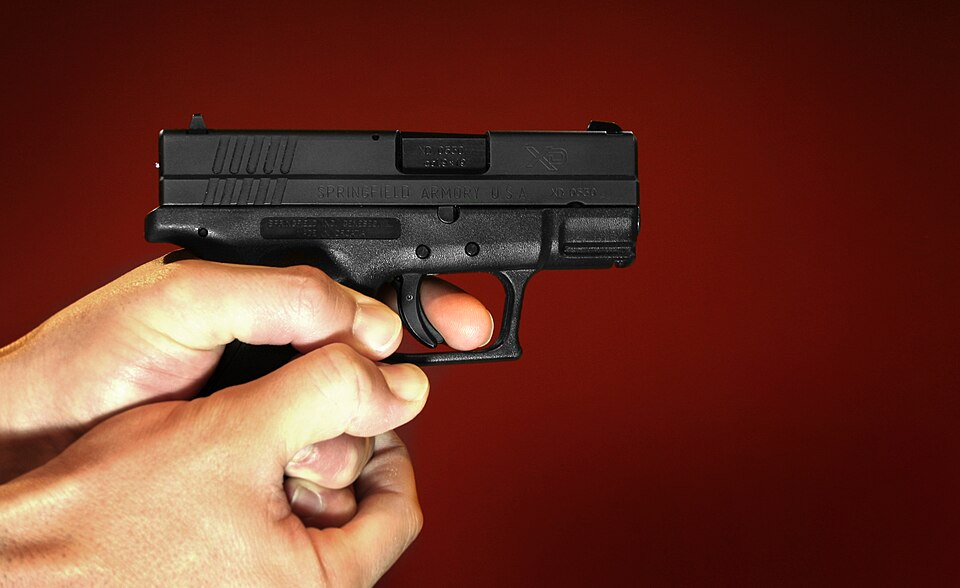
If you ask ten experienced shooters which handgun has the "best" trigger, you will get ten passionate answers—and half of them will contradict each other. One shooter swears by the crisp 3.5-pound break of a 1911 or Staccato 2011; another trusts nothing except the heavy first pull of a Beretta 92 or CZ P-01; and the majority carry a modern striker-fired pistol like a Glock 19, SIG P365, or Springfield Echelon. Understanding trigger action cuts through the internet noise and lets you pick a platform that matches how you actually train and deploy your firearm.
1. What Is Handgun Trigger Action?
In simple terms, a handgun's trigger action describes the mechanical chain reaction that happens from the moment your finger begins pressing the trigger shoe until the firing pin strikes the cartridge primer—and how the mechanism resets for the next shot.
Every semi-automatic pistol must solve two engineering jobs: storing energy (via a spring-loaded striker or hammer) to detonate the primer, and controlling when that energy is released (via a sear and internal drop safeties). Different trigger actions divide that workload between the slide's recoil cycle and your trigger finger in very different ways.
1. Take-Up (Pre-Travel)
The initial rearward movement of the trigger before it meets firm resistance. Take-up often deactivates internal firing-pin block safeties and moves the trigger bar into position.
2. The Wall
The distinct point of resistance where the trigger bar engages the sear. Shooters stage their finger against the wall to finalize sight alignment before breaking the shot.
3. The Break
The moment the sear releases the striker or hammer. A "crisp" break feels like snapping a thin glass rod; a "rolling" or "creepy" break feels like dragging across grit before firing.
4. Over-Travel & Reset
Over-travel is how far the trigger moves after the shot fires. Reset is the forward distance required for the disconnector to re-engage the sear so you can fire the next round.
2. Why Trigger Action Matters (And Why Shooters Debate It So Heavily)
Your trigger finger is the final human link between a stable sight picture and a bullet leaving the muzzle. Even a 1-millimeter disturbance of the muzzle at the moment of sear release shifts impact by several inches at 15 yards. That makes trigger action central to three competing priorities:
- Shootability & Speed: A short, light, predictable trigger makes it far easier to press straight rearward without disturbing the sights—especially during rapid follow-up shots or small-target precision work.
- Holstering & Stress Safety Margin: Under high adrenaline, fine motor control drops and startle reflexes can cause a shooter's finger to tighten unintentionally. A longer or heavier initial trigger stroke—or a physical manual safety—adds forgiveness when drawing, moving, or re-holstering into a concealed IWB or duty holster.
- Training Simplicity: Systems with two different trigger pulls (like a heavy first shot followed by a light second shot) require dedicated dry-fire practice to master the transition, whereas single-action and striker-fired pistols feel identical from shot one to shot fifteen.
Why Is Trigger Action So Heavily Debated?
The debate exists because no single trigger action maximizes both mechanical forgiveness and effortless speed at the same time. Striker-fired fans value having one trigger pull to learn with zero external levers to forget under stress. DA/SA loyalists argue that a heavy double-action first pull plus an exposed hammer you can pin with your thumb while holstering prevents negligent discharges. Meanwhile, 1911/2011 shooters point out that nothing matches an SAO trigger for raw accuracy and split times once thumb-safety manipulation becomes muscle memory.
3. The Five Major Handgun Trigger Actions Compared
| Trigger Action | Firing Mechanism | Typical Pull Weight | Consistency (Shot 1 vs. 2+) | Signature Platforms |
|---|---|---|---|---|
| Striker-Fired Pre-set / Partially Cocked |
Internal spring-loaded striker; trigger finishes tensioning & releases | 4.5 – 6.5 lbs | Identical every shot | Glock 19, Springfield Echelon, Hellcat, SIG P365 / P320, S&W M&P9, Walther PDP, CZ P-10, HK VP9 |
| Single Action Only (SAO) | Cocked hammer (external or internal); trigger only releases sear | 2.5 – 4.5 lbs | Identical every shot (requires manual safety) | Staccato P / C2 / CS, Springfield 1911 DS Prodigy, Kimber/Colt 1911, SIG P226 Legion SAO, FN Reflex |
| Double / Single Action (DA/SA) | External hammer; Shot 1 cocks & drops hammer (DA), Shot 2+ fires cocked (SA) | DA: 8.5 – 11.5 lbs SA: 3.5 – 5.0 lbs |
Two distinct pulls (heavy first, light follow-ups) | Beretta 92FS / M9A4, CZ 75 SP-01 / P-01, CZ Shadow 2, SIG P226 / P229, HK P30 / USP, FNX-45 Tactical |
| Double Action Only (DAO) | Hammer rests forward; every trigger pull cocks and releases hammer | 8.0 – 11.0 lbs | Identical long, heavy pull every shot | Classic duty DAO autos, S&W Bodyguard / J-Frame revolvers, pocket .380s |
| HK LEM / Hybrid Pre-Cocked | Two-piece hammer pre-cocked by slide; light take-up into crisp break | 4.5 – 5.5 lbs (Light LEM) | Identical every shot with hammer thumb-check | HK P30 LEM, HK USP LEM, HK45 LEM |
A. Striker-Fired (The Modern Duty & Carry Standard)
Instead of a pivoting hammer, a striker-fired handgun uses an inline, spring-loaded firing pin (the striker) inside the slide. When you rack the slide, the striker spring is partially compressed (Glock, S&W M&P, Springfield Hellcat/Echelon) or fully compressed (Walther PDP, Canik METE, CZ P-10, SIG P320). Pressing the trigger clears an internal firing-pin block, completes striker tension if needed, and drops the sear.
- Why Shooters Choose It: Every shot has the exact same ~5 lb pull weight and travel, there is no external hammer to snag on clothing, and integrated trigger-blade safeties resist inertial drops without requiring a thumb safety.
- Notable Examples on This Site: Glock 19 Gen 5, Springfield Echelon 4.5F, Springfield Hellcat Pro, SIG Sauer P365, S&W M&P9 M2.0, Walther PDP, CZ P-10 C/F, and HK VP9.
B. Single Action Only — SAO (The Gold Standard for Precision & Speed)
In a Single Action Only pistol, the trigger performs only one job: releasing an already-cocked hammer. Because the slide's recoil stroke does 100% of the work cocking the mainspring, the trigger does not have to fight heavy spring tension. That allows a straight-back, glass-rod break at 2.5 to 4.5 lbs with a reset measured in a couple of millimeters.
- The Non-Negotiable Rule: Because an SAO trigger is short and light, external-hammer SAO pistols are carried "cocked and locked" (round chambered, hammer back, thumb safety engaged) and rely on disciplined thumb-safety sweeps on the draw. (Internal-hammer SAO micro-compacts like the FN Reflex / Reflex XL and S&W Equalizer / Shield EZ enclose the hammer inside the slide and add a trigger blade or grip safety.)
- Notable Examples on This Site: Staccato P / C2 / CS (2011), Springfield 1911 DS Prodigy, and Kimber / Colt / Springfield 1911 (.45 ACP).
C. Double Action / Single Action — DA/SA (Two Modes in One Pistol)
A DA/SA pistol combines an exposed hammer with a decocking lever (or manual safety/decocker). After loading a round, you press the decocker to safely lower the hammer onto a firing-pin block. Your first shot is a long, ~9–11 lb Double-Action pull that cocks and drops the hammer. Once the slide cycles from recoil, the hammer stays cocked, so every follow-up shot is a crisp ~4–5 lb Single-Action pull.
- Why Shooters Love It: You get a heavy, deliberate first trigger stroke that resists accidental discharge under stress, paired with single-action accuracy for follow-up shots—plus you can press your thumb against the back of the hammer while holstering to physically feel if anything snags the trigger.
- The Catch: Mastering the transition from a 10 lb DA first shot to a 4 lb SA second shot takes dedicated dry-fire and live-fire practice.
- Notable Examples on This Site: Beretta 92FS / M9A4 / 92X, CZ 75 SP-01 / P-01, CZ Shadow 2 / Shadow 2 Compact, SIG Sauer P226 / P229 Legion, HK P30 / USP9, and FNX-45 Tactical.
D. Double Action Only — DAO (Maximum Mechanical Simplicity)
In a DAO firearm (common in snub-nose revolvers and classic police-issue autos), the hammer never stays cocked between shots. Every single pull of the trigger must both cock the hammer all the way back and release it. While this eliminates decockers, external safeties, and DA-to-SA transitions, the long, heavy pull requires strong grip fundamentals for rapid shooting.
E. HK LEM / Hybrid Pre-Cocked Hammer Systems
Heckler & Koch's Law Enforcement Modification (LEM) uses a clever two-piece hammer: racking the slide pre-cocks the internal mainspring while leaving the outer hammer spur resting forward. Your trigger pull has a long, very light (~2 lb) take-up that rotates the outer hammer back, followed by a clean ~4.5–5.5 lb break. You get striker-fired pull consistency from shot one onward while keeping an external hammer you can thumb-check in the holster.
4. Platform-by-Platform Trigger Breakdown
Even within the same action category, manufacturers tune trigger geometry, sear angles, and reset feel differently. Here is how today's top handgun platforms compare on the range:
Glock Gen 5 & Ruger RXM
Partially tensioned striker with a distinct blade safety, noticeable take-up, a firm ~5.5 lb wall, and a tactile, audible reset. Ultra-reliable and predictable under stress.
Glock 19 Gen 5 Guide → • Ruger RXM Guide →Springfield Echelon & Hellcat Pro
The Echelon's Central Operating Group (COG) delivers a clean ~4.5–5 lb break with a short, positive reset, while the Hellcat Pro uses a flat-faced shoe tuned for controllable micro-compact carry.
Echelon 4.5F Guide → • Hellcat Pro Guide →Walther PDP, Canik METE & CZ P-10
Fully pre-cocked striker designs famous for light ~4.2–4.8 lb breaks, minimal creep, and ultra-short tactile resets straight out of the factory box.
Walther PDP Guide → • Canik METE Guide →Staccato 2011 & 1911 Platforms
Sliding straight-pull trigger bow with ~3.5–4.25 lb crisp break, almost zero over-travel, and an instantaneous reset built for speed and precision.
Staccato 2011 Guide → • Prodigy DS Guide →CZ 75 / Shadow 2, Beretta 92 & SIG P226
Smooth DA first stroke paired with refined SA follow-ups. Models like the SIG P226 Legion (with SRT) and Beretta 92X/M9A4 feature shortened single-action reset geometry.
CZ Shadow 2 Guide → • SIG Legion Guide →FN Reflex & S&W Equalizer / Shield EZ
Internal-hammer SAO systems that deliver a cleaner, lighter ~4.5–5 lb trigger pull than most micro-strikers while keeping slide-racking effort low.
FN Reflex XL Guide → • S&W Equalizer Guide →5. Which Trigger Action Is Best for Your Deployment?
The best trigger action depends on how you carry, store, and shoot the pistol:
| Deployment Role | Best Trigger Action(s) | Why It Wins in This Role | Top Platform Examples |
|---|---|---|---|
| Everyday Concealed Carry (EDC / AIWB) | Striker-Fired or DA/SA (Decocker) / HK LEM | No manual thumb safety to miss on a one-handed draw; DA/SA and LEM add thumb-over-hammer safety during appendix re-holstering. | SIG P365 / XMacro, Springfield Hellcat Pro, Glock 43X / 19, CZ P-01, HK P30SK LEM |
| Law Enforcement / Duty Holster | Striker-Fired (~5.0–5.5 lb) | Uniform pull weight across an entire agency, fast qualification learning curve, and seamless compatibility with active-retention Level II/III holsters. | Glock 17 / 47 / 45, Springfield Echelon 4.5F, S&W M&P9 M2.0, Walther PDP |
| Home Defense / Nightstand | Striker-Fired, DA/SA, or SAO (with Thumb Safety) | Full-size grip and light-bearing dust cover tame recoil; choose an action you can run instinctively in the dark without fumbling controls. | Springfield Echelon, Beretta M9A4, SIG P226 Legion, FNX-45 Tactical, Staccato P |
| USPSA / IDPA Competition & Range Precision | Single Action Only (SAO) or Tuned DA/SA / Competition Striker | Lightest pull weight (2.5–4.0 lb), minimal pre-travel, and fastest reset yield the quickest split times and tightest groups. | Staccato P / XL, CZ Shadow 2, Canik SFX Rival, S&W M&P9 M2.0 Competitor |
| New Shooters & Recoil-Sensitive Hands | Internal-Hammer SAO or Light-Rack Striker | Reduced slide-rack spring tension combined with a crisp, predictable ~4.5–5 lb trigger prevents flinching and builds confidence. | S&W Equalizer / Shield EZ, Walther PDP F-Series, FN Reflex XL |
6. Upgrade & Maintenance Gear for Cleaner Trigger Performance
Before replacing factory trigger parts on a carry or duty pistol, remember that carbon fouling on the trigger bar, connector, and sear surfaces—or oil inside a striker channel—is the #1 cause of a gritty trigger. Keep your striker channel dry and apply a single needle-tip drop of synthetic oil to the trigger bar/connector interface using our Field Strip & Cleaning Hub guides, or explore proven trigger and bench tools below:
Match a Red Dot to Your Slide
Check exact RMR, RMSc/K, and DPP mounting plates, VIS pins, screw threads, and torque specs across 50 handguns.
Open Optic Matcher →Verify Holster & Light Fitment
Confirm IWB, AIWB, OWB, and duty retention holster compatibility with Streamlight and SureFire weapon lights.
Open Holster Fitment Checker →Pair the Right 9mm, .45 & 10mm Ammo
Compare range FMJ vs. defensive JHP bullet weights and grain pairings across the top 30 handguns.
Read Ammunition Guide →Smart Trigger Selection Habits
- Match the trigger action to your primary role (carry, duty, home defense, or competition) rather than chasing the lightest pull weight
- Practice dry-fire trigger control—especially the DA-to-SA transition if you carry a hammer-fired DA/SA pistol
- Keep striker channels dry and lightly lubricate the trigger bar/connector contact point during routine cleaning
- Verify holster trigger-guard coverage rigorously before carrying any light-trigger pistol
Common Trigger Mistakes to Avoid
- Installing ultra-light 2.5–3 lb competition triggers in a defensive concealed-carry pistol
- Forgetting to sweep the thumb safety off during dry-fire and live draws on an SAO 1911/2011
- Over-oiling the frame or spraying solvent into the firing-pin/striker channel, which attracts fouling and causes sluggish resets
- Slapping or jerking the trigger at the wall instead of pressing straight back and riding the reset