
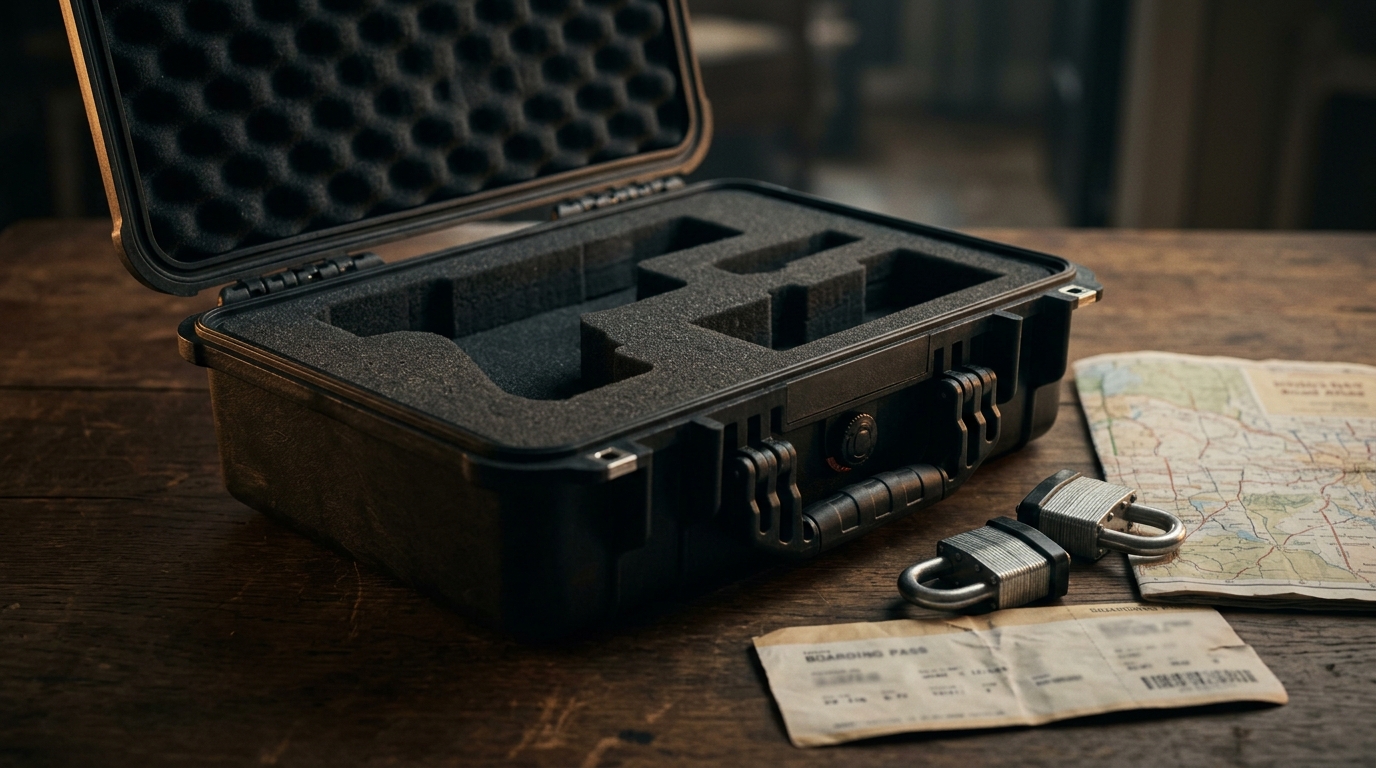
Indoor shooting ranges offer climate-controlled bays, motorized target retrieval, and convenient access year-round—but enclosed concrete and steel baffles amplify muzzle blast, concentrate airborne particulates, and put shooters within arms' reach of neighboring lanes. Mastering indoor range best practices ensures newcomers feel confident from minute one and keeps experienced shooters sharp without developing sloppy habits.
1. The Four Universal Firearm Safety Rules on an Indoor Firing Line
Every indoor range briefing starts with the four foundational rules of firearm safety, and every experienced shooter treats them as non-negotiable physical habits:
1. Treat Every Firearm as Loaded
Never assume a gun is empty because someone handed it to you or because the magazine is out. Visually and physically inspect the chamber every time you pick up a firearm.
2. Muzzle Always Downrange
Inside a shooting booth, "safe direction" means pointed strictly downrange toward the backstop—never sideways across lane dividers, upward at baffles, or backward toward the ready area.
3. Finger Off the Trigger Until on Target
Keep your trigger finger indexed straight along the frame or slide above the trigger guard until your sights are aligned on target and you have made the conscious decision to fire.
4. Know Your Target & Backstop
Hang targets at eye level so bullets strike the center of the backstop trap rather than the floor, ceiling baffles, or target carrier clips.
2. Essential Range Bag Gear: Why "Doubling Up" Matters Indoors
Gunfire inside an enclosed bay routinely exceeds 155–165 decibels (dB), and acoustic energy reflects off hard walls and lane dividers. Even a single unprotected shot—or a poorly sealed earmuff cushion—can cause permanent cochlear damage. You can browse vetted ear/eye protection and range essentials in our Gear Storefront.
| Gear Category | First-Time Shooter Baseline | Regular Shooter Upgrade |
|---|---|---|
| Hearing Protection | Foam earplugs (NRR 30–33 dB) worn underneath over-the-ear muffs (NRR 25–30 dB). | High-NRR foam plugs paired with slim electronic muffs (such as Walker's Razor or Howard Leight Impact Sport) for clear RSO commands. |
| Eye Protection | ANSI Z87.1 impact-rated wraparound polycarbonate shooting glasses. | Anti-fog, thin-temple Z87.1 ballistic glasses that do not break the acoustic seal of earmuff cushions. |
| Apparel & Footwear | Crew-neck shirt (high collar blocks hot brass), closed-toe shoes, and billed cap. | Dedicated range shirt, fitted belt, and low-profile athletic or tactical shoes with oil-resistant soles. |
| Range Bag Essentials | Cased unloaded firearm, factory FMJ ammo, staple gun/tape, and chamber flags. | Magazine loader (Maglula UpLULA), shot timer or par-timer app, lens wipes, D-Lead wipes, and spare batteries. |
Pro Tip: Never Break Your Ear-Pro Seal in the Bay
If your earmuffs feel uncomfortable or fogged glasses need adjusting, step out of the firing bay through both airlock doors into the lobby before lifting your ear protection. Someone in Lane 8 shooting a short-barreled .308 or ported 9mm can fire at any second.
3. First-Time Visitor Etiquette: Arriving, Uncasing & Cease-Fires
If you are new to indoor ranges, following a clean sequence eliminates nervousness and immediately signals to Range Safety Officers (RSOs) that you are a safe, squared-away shooter:
- Leave Firearms Cased Until Inside Your Booth: Never uncase, handle, or unholster a firearm in the parking lot, lobby, or behind the yellow safety line. Carry cased guns directly to your assigned lane bench.
- Orient the Case Before Opening: Set your range bag or pistol case on the bench so the muzzle points downrange the moment you unzip or unlatch it.
- Load Magazines Only at the Bench: Keep ammunition boxed until you are inside your booth. If you brought pre-loaded magazines, verify whether the range prohibits steel-core, steel-case, or tracer ammunition before firing—review our Handgun Ammunition Guide to compare range FMJ options.
- Set Target Height Properly: Send the target carrier out to 5–7 yards and verify that the center of your paper target aligns with the center of the rubber/steel backstop—not high enough to hit the overhead trolley or low enough to skip rounds off the concrete floor.
- Obey "Cease Fire" Commands Immediately: If an RSO calls "Cease Fire!", take your finger off the trigger, keep the muzzle pointed downrange, unload and lock the slide/bolt open, place the firearm on the bench with the ejection port facing up, and step behind the safety line until the "All Clear" is given.
4. Best Practices for Regular Shooters: Etiquette & High-Value Training
Once basic safety is second nature, regular indoor range visitors often fall into two traps: mindless "blasting" without a training goal, or overlooking courtesies that affect neighboring lanes.
- Be Mindful of Concussion & Muzzle Blast: Firing a braked AR-15 (configured with our AR-15 Weight & Budget Planner), short-barreled rifle, or magnum revolver next to a new shooter with a .22 LR can be jarring. Request an end lane when shooting high-concussion platforms and keep rapid-fire strings within your range's cadence rules.
- Sweep Brass Only Behind the Line—and Never Reach Forward: Never step even one foot past the firing line to retrieve a dropped magazine, brass casing, or fallen target. Ask an RSO to retrieve anything forward of the bench.
- Verify Range Holster Rules Before Drawing: Most public indoor ranges prohibit drawing from a concealed or OWB holster unless you have passed their holster-draw qualification. Confirm policy at check-in and verify trigger-guard fitment in our Holster Fitment Matrix before unholstering.
- Replace Low-Yield Mag Dumps with Structured Drills: Bring 3–4 specific drills printed on index cards—such as 5-shot slow-fire accuracy groups at 7 yards, Dot Torture, Bill Drills (if permitted), or reload-and-reacquire drills—so every box of ammo builds measurable skill. If you are zeroing a new pistol red dot, confirm exact plate and screw torque specs first using the Optic Footprint & Screw Matcher.
5. Lead Exposure & Post-Range Hygiene
Indoor ranges use HEPA filtration and directional airflow to push primer smoke downrange, but microscopic lead styphnate residue still settles on benches, magazines, brass, and skin.
- No Food, Drink, Gum, or Vaping in the Bay: Ingestion is the primary route of lead absorption during range sessions.
- Wash with Cold Water & Lead-Removing Soap: Immediately after leaving the bay, wash your hands and face with cold water and de-leading soap (such as D-Lead). Warm or hot water opens skin pores and increases absorption.
- Keep Range Shoes & Bags Out of Living Spaces: Store your range bag on a garage shelf rather than on beds or kitchen counters, and wipe down phone screens and firearm grips after cleaning.
Indoor Range Best Practices (Do)
- Double up with foam earplugs + over-ear muffs before entering the bay
- Uncase and case firearms exclusively on the bench with the muzzle pointed downrange
- Keep malfunctions pointed downrange; lock the slide back and raise a hand if you need RSO assistance
- Wash hands and face with cold water and de-leading soap immediately after shooting
Common Indoor Range Mistakes (Avoid)
- Turning around on the firing line with a firearm in hand to talk to a friend or RSO
- Reaching forward of the firing line to pick up dropped brass or magazines
- Shooting steel-core, armor-piercing, or unauthorized ammo that damages indoor backstops
- Leaving the range without a structured target plan and firing 200 rounds into a single ragged hole at 3 yards