
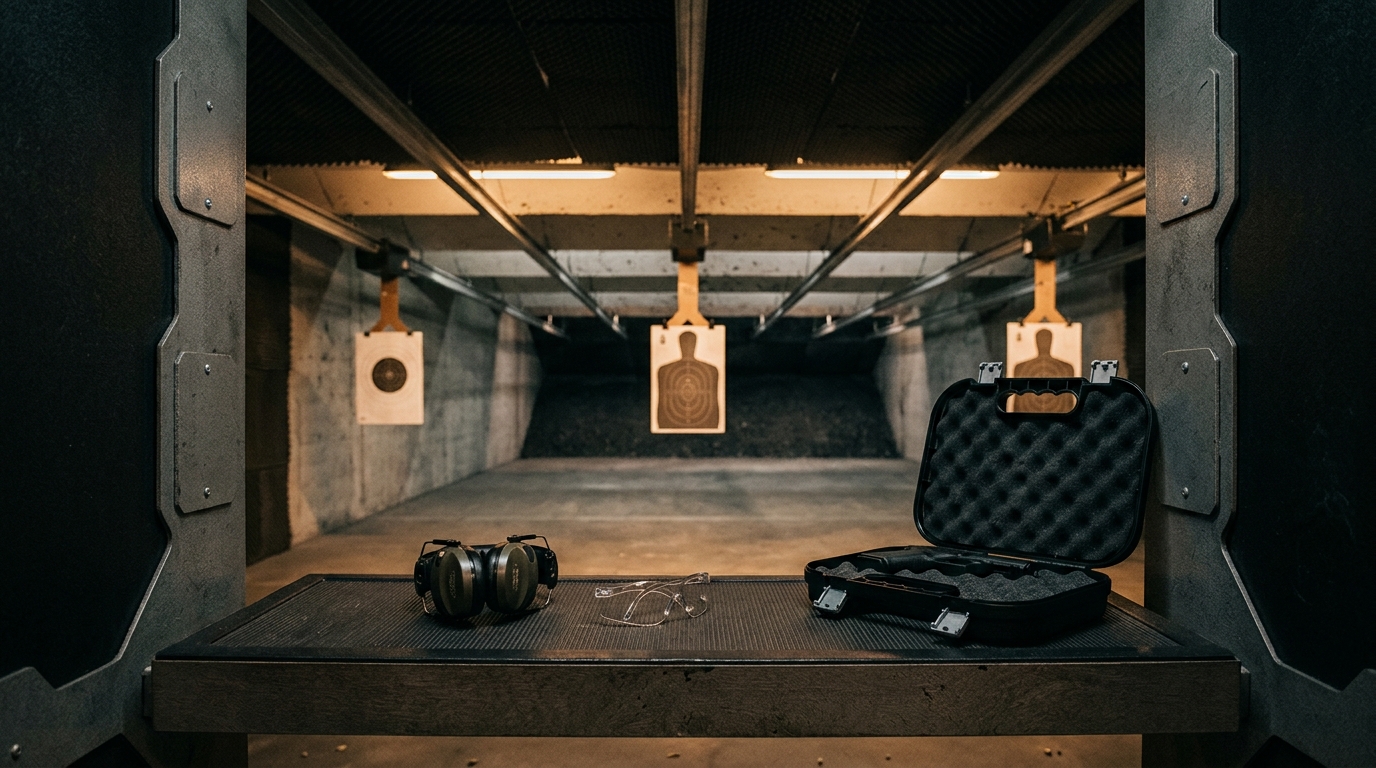
Unlike a driver's license—which is honored nationwide under state compacts—there is no automatic 50-state concealed carry reciprocity in the United States. The moment you cross a state line, your home state's rules stop applying and the host state's statutes govern everything from whether your permit is recognized to what magazine capacity and ammunition type you may legally possess.
Legal Disclaimer
This guide is provided for educational and logistical planning purposes only and does not constitute legal advice. Firearm statutes, prohibited-place lists, and reciprocity agreements change frequently—always verify current statutes directly with the destination state's Attorney General or State Police prior to travel.
1. How Concealed Carry Laws Differ Across U.S. States
When researching any state you plan to visit or drive through, evaluate five distinct legal variables rather than asking only "Is my permit valid here?"
| Legal Variable | Permissive / Permitless States | Restrictive / Non-Reciprocal States |
|---|---|---|
| Carry Authority | Permitless ("Constitutional") carry for eligible adults (often 21+, though some are 18+) or broad bilateral permit reciprocity. | Requires an in-state or specifically endorsed non-resident permit; out-of-state permits from most states are not honored (such as NY, NJ, CA, IL, MA, MD, HI). |
| Duty to Inform | No affirmative duty to disclose unless an officer specifically asks (such as Florida and Georgia). | Mandatory immediate disclosure during any official traffic stop or law enforcement encounter (such as Texas, North Carolina, Ohio, and Michigan). |
| "No Guns" Signage | Signs carry civil trespass weight only; you must leave if asked, but entering is not an automatic criminal offense. | Compliant statutory signage carries the full force of criminal law immediately upon entry (such as Texas 30.06/30.07, South Carolina, and Illinois). |
| Magazine & Ammo Limits | No state cap on standard-capacity 15-, 17-, or 21-round pistol magazines or hollow-point ammunition. | Strict caps (often 10 or 15 rounds) on magazines possessed inside the state; New Jersey strictly restricts hollow-point ammunition outside narrow exemptions. |
| Sensitive Locations | Generally limited to courthouses, schools, jails, sterile airport zones, and bars or portions of restaurants deriving primary revenue from alcohol. | Broad "sensitive places" lists that can include public transit, parks, museums, healthcare facilities, and private businesses unless posted otherwise. |
2. Preparing for Interstate Road Travel & FOPA ("Safe Passage")
Before driving across multiple states, map every state along your route—including fuel stops, overnight hotels, and potential highway detours.
How Federal Safe Passage (18 U.S.C. § 926A) Actually Works
Under the Firearm Owners' Protection Act (18 U.S.C. § 926A), you may transport a firearm through a state where you cannot legally carry it—provided you meet every strict condition:
- Legal at Origin & Destination: You must be legally entitled to possess and carry the firearm at both the place where your trip begins and the place where it ends.
- Unloaded & Inaccessible: Both the firearm and all ammunition must be completely unloaded. Neither the firearm nor the ammunition may be readily accessible from the passenger compartment.
- Locked Container or Trunk: In vehicles with a separate trunk, lock both in the trunk. In SUVs, hatchbacks, or pickup cabs without a separate trunk, both the firearm and ammunition must be inside a locked container other than the glove compartment or center console.
- Continuous Transit Only: FOPA protects continuous travel through a restrictive state—stopping for gas or food is normal, but checking into a hotel for an overnight stay or sightseeing in a restrictive state (such as New York, New Jersey, or Massachusetts) can strip FOPA protection and expose you to local possession charges.
Pre-Trip Road Checklist
Audit Magazine & Ammo Compliance
Leave 15+ round magazines at home if your destination caps capacity at 10 rounds—or consider traveling with a 10-round compliant slimline pistol compared on our Handgun Comparison Tool. Swap JHP rounds for FMJ loads if passing through or staying in New Jersey.
Pack Hard-Sided Lockable Cases
Bring two separate lockable hard cases (one for the pistol, one for ammo/magazines) so you can transition cleanly into FOPA-compliant trunk storage before crossing a non-reciprocal border.
Carry Physical Permits & ID
Keep your government photo ID and physical resident/non-resident concealed carry permits together, and review each state's duty-to-inform rule before entering that state.
Avoid Federal Facilities
Never carry inside U.S. Post Offices, federal courthouses, VA facilities, or military installations—federal bans override state carry laws nationwide.
3. Flying with a Firearm: TSA & Airline Step-by-Step Protocol
You can legally fly with unloaded firearms in checked baggage on U.S. domestic flights, provided you comply with both federal TSA regulations (49 CFR § 1540.111) and your specific airline's tariff rules.
TSA Packing Requirements
- Completely Unloaded Firearm: No round in the chamber, and no loaded magazine inserted in the firearm. Double-check visually and physically before closing the case.
- Hard-Sided, Locked Container: The firearm must be inside a rigid, hard-sided case (such as Pelican, Nanuk, Vault, or Vaultek Lifepod—see lockable case options in our Gear Storefront) that completely secures the firearm and cannot be pried open at the corners when locked.
- Every Padlock Hole Must Be Filled: If your case has four padlock hasps, put a lock in all four. TSA inspectors routinely reject cases if an empty hasp allows a corner to flex open.
- TSA-Approved vs. Non-TSA Locks: TSA regulations explicitly allow either TSA-recognized locks or non-TSA heavy-duty padlocks—only you may retain the key or combination, and if TSA needs to inspect the interior, they will page you to unlock it. (Check your airline's specific policy as well, as most align with TSA.)
- Ammunition Packaging Rules: Ammunition is prohibited in carry-on bags. In checked luggage, ammo must be packed in the manufacturer's original fiber/wood/metal box or a dedicated plastic ammo box with individual partitions (such as MTM Case-Gard)—never loose in a bag or loosely rattling in a pocket. Most airlines cap checked ammunition at 11 lbs (5 kg) per passenger.
- Loaded Magazines: TSA allows loaded magazines in checked baggage only if the ammo is completely enclosed so primers cannot be struck (for example, inside a magazine pouch with a full flap or a partitioned ammo box), though some airlines require magazines to be empty—always verify your carrier's firearm page.
At the Airport: Check-In, Screening & Baggage Claim
- Arrive 45–60 Minutes Earlier Than Usual: Proceed directly to the full-service airline ticket counter (never curbside check-in or self-tag drop).
- Declare Calmly and Clearly: Tell the agent: "I need to declare an unloaded firearm in my checked luggage." Never say "I have a gun" in a way that could cause alarm.
- Sign the Firearm Declaration Tag: You will sign an orange or white declaration card certifying the firearm is unloaded. Place it inside the hard case (or inside the outer suitcase beside the locked pistol case, per the agent's instruction) and lock the case.
- Wait Near Screening Until Cleared: Ask the ticket agent where TSA conducts oversized/special baggage screening. Wait within earshot for 10–15 minutes until TSA clears the bag—if they need your key or combination, leaving the area early can delay your bag or cause it to miss the flight.
- Baggage Claim Retrieval: Under federal law, airlines cannot place a visible "FIREARM" tag on the outside of your bag. At your destination, firearms are often routed to the airline's Baggage Service Office (BSO), where you will present your photo ID and baggage claim stub to retrieve it.
Critical Warning: Flight Diversions to Restrictive States
If a flight bound for a permissive state is diverted due to weather or mechanical issues to an airport in New York or New Jersey, do not claim your checked bag containing a firearm unless you are legally licensed to possess it in that state. Instead, instruct the airline to hold the bag in airline custody and re-route it to your final destination—claiming the bag at the carousel in NYC/NJ can trigger immediate arrest even if you never intended to land there.
Smart Firearm Travel Habits
- Fill every padlock hole on your hard-sided case with matching keyed-alike padlocks
- Put an Apple AirTag or GPS tracker inside the locked firearm case
- Keep a printed copy of TSA's firearm transport rules and your airline's policy in your carry-on
- Verify destination laws before leaving the airport terminal at your arrival city
Travel Mistakes That Cause Arrests or Fines
- Accidentally leaving a spare magazine, loose round, or pocket knife in your carry-on backpack
- Using a soft-sided zippered bag or a flimsy case whose corners pry open when locked
- Making an overnight hotel stop in a non-reciprocal state while relying on FOPA transit rules
- Taking possession of checked firearm luggage during an unscheduled diversion in NY or NJ